30 US Lawmakers Urge End to Ambiguity on Israel's Nuclear Program
Middle East Eye
A group of 30 Democratic U.S. House members has sent a letter to Secretary of State Marco Rubio, calling for an end to the long-standing policy of ambiguity toward Israel's nuclear program. The lawmakers argue that Washington cannot maintain a coherent non-proliferation policy while refusing to acknowledge Israel's arsenal.
On March 31, 30 Democratic lawmakers in the U.S. House of Representatives sent a joint letter to Secretary of State Marco Rubio, urging the administration to end the decades-old policy of deliberate ambiguity toward Israel's secretive nuclear program.
The letter, led by Representative Joaquin Castro and co-signed by prominent lawmakers including Alexandria Ocasio-Cortez, Ro Khanna, Rashida Tlaib, Ilhan Omar, and Pramila Jayapal, argued that Washington's refusal to acknowledge Israel's nuclear arsenal is untenable, especially as American troops are deployed in the region.
“We are, in the fullest sense, fighting alongside a nation whose potential nuclear weapons arsenal the U.S. government officially refuses to acknowledge,” the letter stated. The lawmakers emphasized that Congress has a constitutional duty to be “fully informed about the nuclear balance in the Middle East, the risks of escalation by any party to the conflict, and the administration’s plans and contingencies for those scenarios.”
Israel is one of five nations that have not joined the Treaty on the Non-Proliferation of Nuclear Weapons (NPT). The treaty prohibits non-nuclear-weapon states from developing nuclear arms, meaning the International Atomic Energy Agency has no means to monitor or verify Israel's arsenal.
According to the Nuclear Threat Initiative, Israel is believed to possess approximately 90 nuclear warheads and enough plutonium to produce about 200 more. Specifically, Israel is estimated to have between 750 and 1,110 kilograms of plutonium, sufficient to build 187 to 277 nuclear weapons.
The lawmakers argued that Washington cannot craft a coherent non-proliferation policy for the Middle East—covering Iran's civilian nuclear program and Saudi Arabia's civilian nuclear ambitions—while maintaining “an official silence” on Israel, a party to a conflict in which the U.S. is directly engaged.
“We ask that you apply to Israel the same standard of transparency that the United States expects from any other nation that may be pursuing or maintaining a nuclear weapons capability,” the lawmakers wrote in conclusion.
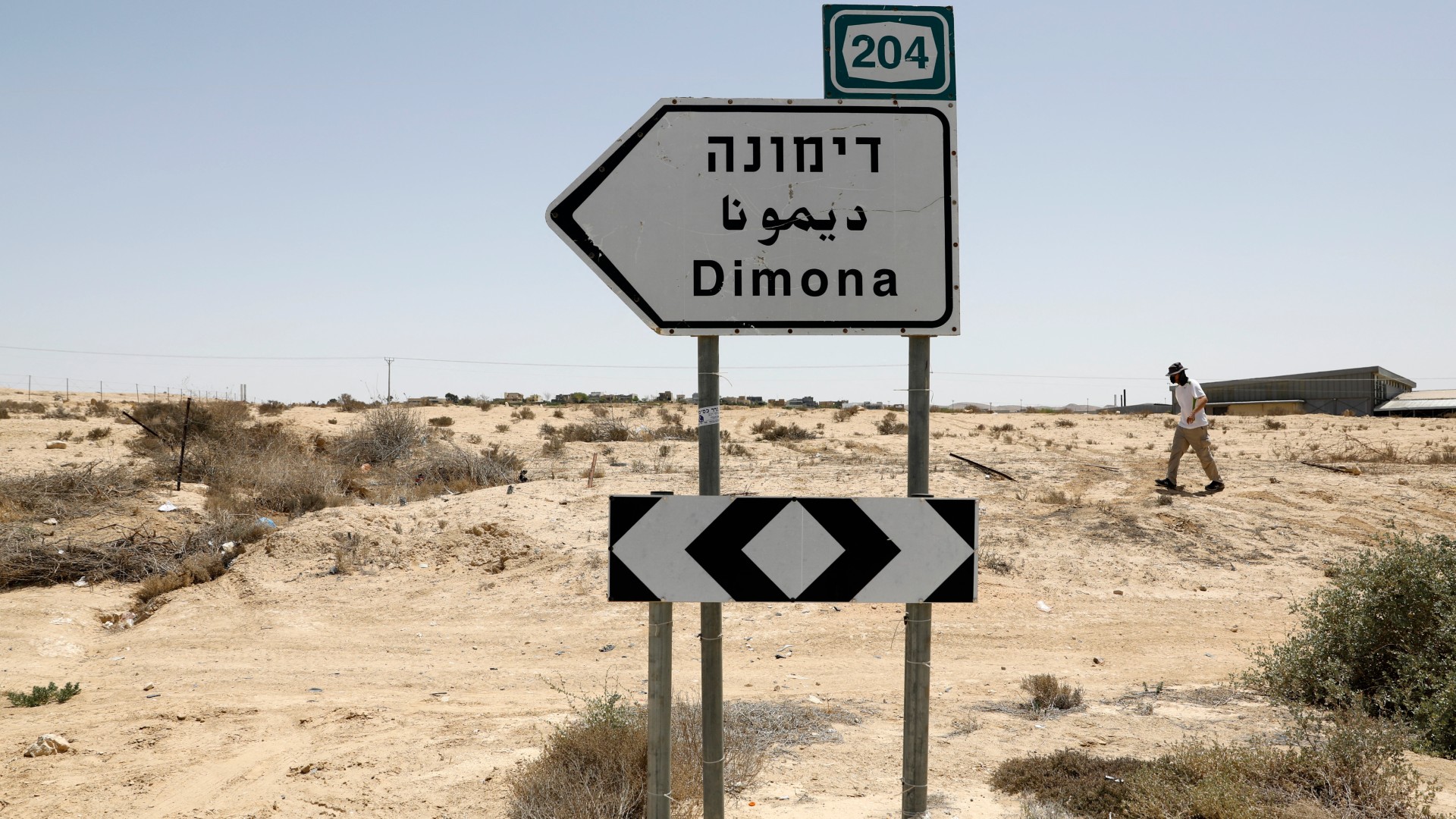
Israel's nuclear program began in the 1950s, initially with French assistance and without Washington's knowledge. Declassified documents show that the U.S. repeatedly questioned Israel about the Dimona facility in the Negev desert in the late 1950s and early 1960s. U.S. officials inspected the site eight times between 1961 and 1969, but an underground plutonium separation plant—essential for producing weapons-grade plutonium—was concealed.
By the late 1960s, the U.S. had finally learned Dimona's true purpose. According to historian Avner Cohen, a secret pact was struck and remains in effect: Washington would not ask if Israel remained silent. “In 1969, the U.S. accepted Israel's special nuclear status, provided Israel committed to secrecy and ambiguity. This is known as the Nixon-Meir nuclear deal of 1969,” Cohen said, referring to leaders Richard Nixon and Golda Meir.
Since then, Israel has maintained a policy of deliberate ambiguity, with officials neither confirming nor denying the existence of its nuclear arsenal. The U.S. has followed suit, even reportedly threatening to discipline any U.S. official who publicly acknowledges Israel's nuclear program. In 2009, President Barack Obama declined to answer whether any Middle Eastern nation possessed nuclear weapons.
Israel's nuclear program first made headlines in October 1986, when former nuclear technician Mordechai Vanunu revealed details about Dimona to The Sunday Times. Vanunu said the facility could produce 1.2 kilograms of plutonium per week, enough for about 12 nuclear warheads annually. Before the story was published, Mossad agents kidnapped Vanunu, returned him to Israel, convicted him of espionage, and sentenced him to 18 years in prison—more than half of which was spent in solitary confinement.