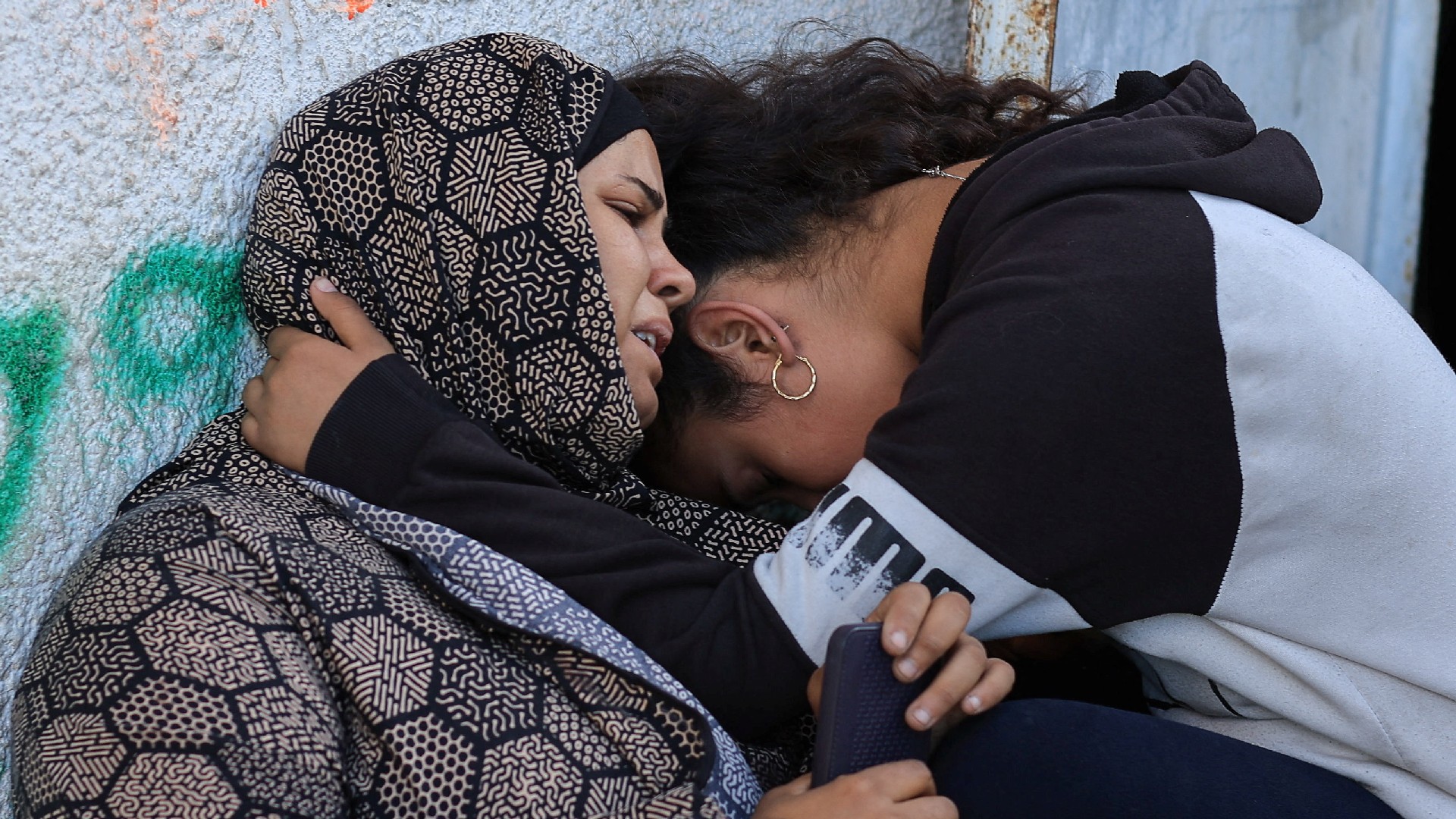
Gaza women brave rubble and winter weather to rescue precious books from ancient mosque library
Theo Middle East Eye
A group of Palestinian women volunteers are working daily to rescue thousands of rare books and manuscripts from the Great Omari Mosque library in Gaza, which has been severely damaged by repeated Israeli airstrikes. Despite blockades, displacement, and shortages, they clean, dry, and store the volumes by hand in a race against weather and destruction. The women believe saving the centuries-old cultural heritage is essential for future generations.
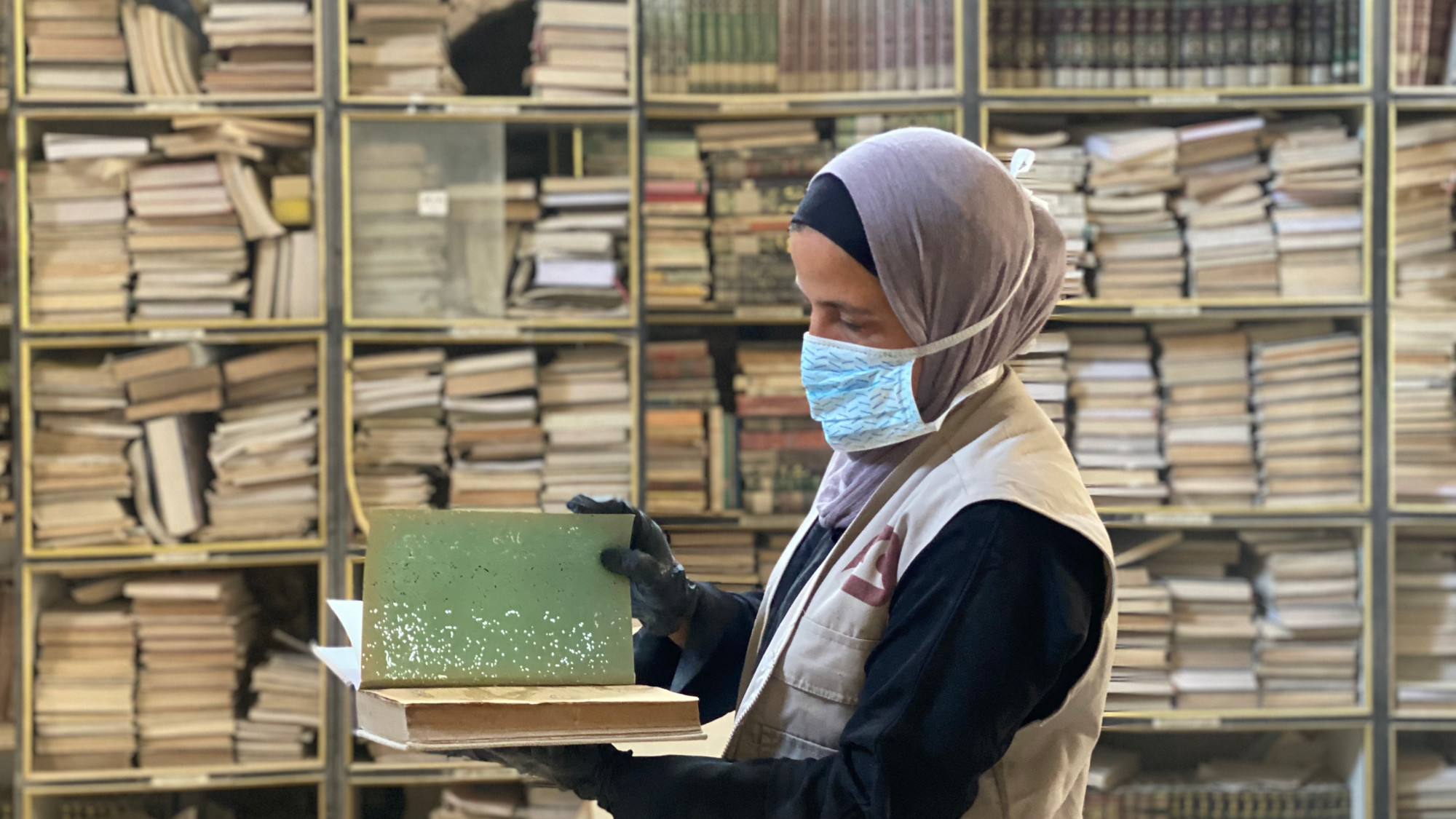
Heavy books are lifted from shattered shelves in the ancient library of the Great Omari Mosque in Gaza. Each volume is gently brushed, wiped clean of dust, and passed hand-to-hand to the only remaining safe corner. This meticulous, resourceful work in austere conditions is how volunteers are saving books and manuscripts from ruin after Israeli bombardments in the Gaza war.
Raneem Mousa, 35, a master's graduate in Arabic language, recounted: “The library was filled with shrapnel, rubble, and droppings from wild animals seeking shelter. Hundreds of books were smashed, papers torn and scattered across the stone floor.” She is one of the Palestinian women with the Eyes on Heritage Institute, on a cultural “emergency” mission in Gaza City. “We started by clearing stones and cleaning. Without proper conservation tools, we used dry cloths, rough brushes, and air-dried the wet books,” Mousa said.
The Great Omari Mosque—the largest and oldest in Gaza—stands on a site that was once a Philistine temple, Roman shrine, Christian church, and from the 13th century an Islamic mosque. Its library, the third largest in Palestine, once held around 20,000 volumes, including 187 manuscripts, many centuries old. During two years of conflict, Israeli forces bombed the mosque at least three times, leaving it in ruins and the library severely damaged.
Despite blockades, displacement, and shortages, Mousa and her colleagues hope to salvage the heritage. “This library holds educational and historical value, affirming Palestinians' historic right to their homeland. The manuscripts are rapidly deteriorating from months of damp, rain, and mold, eroding the pages. Every time a page crumbles in my hand, I feel a piece of history dying,” she said.
The work is carried out with almost no resources. The group coordinates via WhatsApp, with members covering their own travel costs to reach the mosque. With much of Gaza's population displaced, transport destroyed, and fuel scarce, travel is both difficult and expensive. “I fear the day I cannot afford the taxi from my tent in Deir al-Balah to the library in Gaza City,” Mousa said. She lost her home in Jabalia to airstrikes and cannot return because the area is off-limits under Israeli military orders.
Having no homes also means the group cannot store the rescued books privately. They keep them in a small corner of the ruined library, sorted by subject, but the collection remains under constant threat. “We often have to re-clean the books because the building is still crumbling, with no real protection. We are racing against the weather; winter rain and damp wind are enemies as deadly as bombs,” she lamented.
Haneen al-Amasi, 33, director of the Eyes on Heritage Institute, said the all-women organization, founded in 2009, specializes in rescuing, restoring, and digitizing rare books, manuscripts, and historical documents in Gaza. During a brief ceasefire in March 2025, Amasi visited the Great Omari Mosque library for the first time since the war began and was shocked by what she saw. “The entire archive of books, manuscripts, and historical documents was burned or smashed in Israeli attacks. Many others were damaged, eaten by rodents, or taken by displaced people for fuel due to severe gas shortages,” she said.
According to Amasi, the library held unique originals on jurisprudence, geography, and social life, detailing the Palestinian land before 1948. She believes the library and other archives have been deliberately targeted to erase Palestinian memory through the destruction of cultural landmarks. She recalled the 2014 attack when Israel bombed the institute's office building in eastern Gaza City, killing five women volunteers. “That attack caused us pain and anger, but we continued our work,” Amasi recounted. By September 2025, another building containing hundreds of books and documents was destroyed in an airstrike. “Once again, we lost our library.”
Nevertheless, the group presses on with preservation. Amasi has sought support from international organizations, but most focus on immediate humanitarian needs like food and medicine. “I believe cultural heritage is no less important. Future generations in Palestine will ask what we did to protect their history,” she said.
Back at the Great Omari Mosque, Amasi continues working with the team, recalling the reading competitions Gaza children once joyfully took part in before the war. “Today, Gaza's children chase food aid, queue for clean water, and live with trauma from war. By rescuing these books, we are trying to ensure that when the war ends our children have something to read besides news of death,” she shared.