
Saudi Arabia and Kuwait Deny US Airspace, Bases After Plan to Force Open Strait of Hormuz
Middle East Eye
Saudi Arabia and Kuwait have suspended U.S. access to their airspace and military bases after Trump announced 'Project Freedom' to reopen the Strait of Hormuz. The decision forced Trump to pause the plan. Iran closed the strait after the U.S.-Israel assault began in late February.
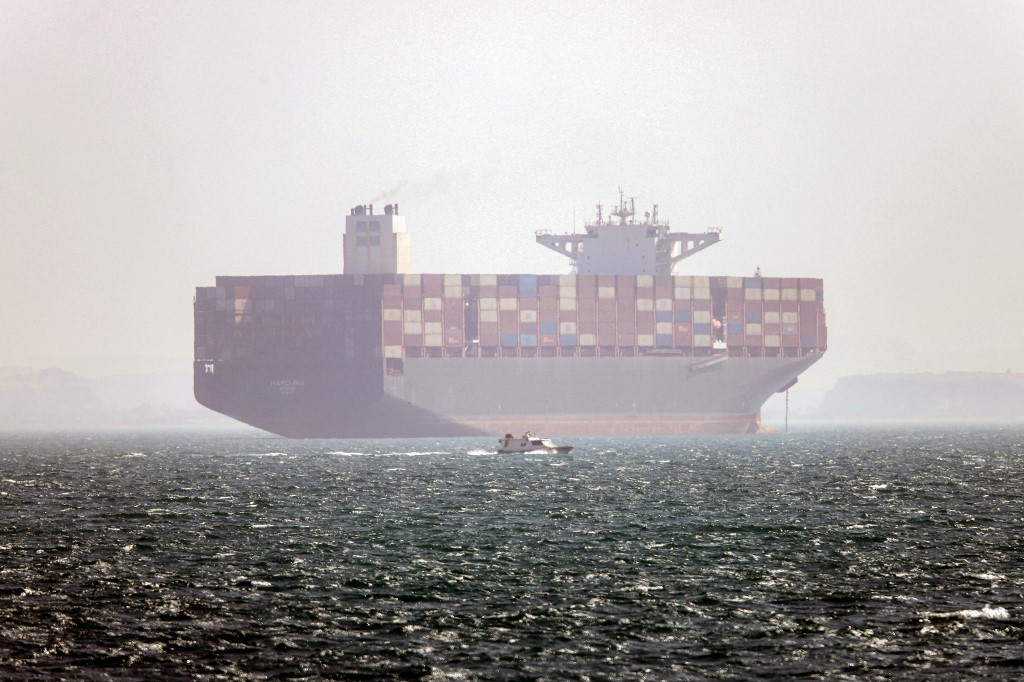
The United States abruptly reversed a plan to ensure passage through the closed Strait of Hormuz after Saudi Arabia and Kuwait suspended U.S. access to their airspace and military bases, NBC News reported, citing two U.S. officials.
Specifically, Saudi Arabia suspended use of Prince Sultan Air Base and Saudi airspace after President Donald Trump announced 'Project Freedom' on social media Sunday afternoon. The kingdom expressed disappointment and informed the U.S. it would not support the plan.
Later, Drop Site News reported that a U.S. administration official confirmed Kuwait also cut access to its bases and airspace.
On Tuesday, Trump said he was pausing 'Project Freedom' to reach a deal with Iran to end the war.
Iran closed the Strait of Hormuz, a vital artery for global shipping, immediately after the U.S.-Israel assault on the country began in late February.
Earlier this week, Iran claimed it had struck a U.S. warship trying to break the blockade. Iran also fired missiles and drones at the UAE, seen as a response to U.S. naval activity.
Iran said Wednesday it is considering a new peace proposal from the U.S., after the Trump administration rejected Iran's offer to reopen the Strait of Hormuz in exchange for ending the war and pushing back nuclear program talks.
Trump said Wednesday he believes a deal with Iran is 'very possible' but threatened to resume bombing if negotiations collapse. He added that the U.S. would accept only Iran's 'surrender.'
The U.S.-Israel invasion of Iran and the subsequent closure of the Strait of Hormuz have heavily impacted the economies and security of Gulf states. Iran's attacks on Gulf countries have caused casualties and infrastructure damage while driving away tourists and businesses.
According to Moody's Analytics, Dubai's hotel occupancy rate is expected to fall to 10% in Q2 2026, down from 80% before the Iran war began. Moody's described the tourism downturn as 'effectively shutting down much of the hospitality sector.'
Qatar's liquefied natural gas exports have also stalled, with the Gulf state extending force majeure on LNG through June.
However, Saudi Arabia and, to a lesser extent, the UAE continue to sell oil via pipelines that bypass the Strait of Hormuz. Saudi Arabia exports about 5 million barrels per day via the East-West pipeline, moving oil from the Gulf to the Red Sea. The UAE has a pipeline to the port of Fujairah, allowing it to export oil at roughly half its pre-war volume.
